Design Build: The Solution to Multifamily Development
The multifamily development landscape is navigating a period of unprecedented complexity. While demand remains robust, with annualized multifamily absorption estimated at 552,292 units at the end of 2024, developers are simultaneously facing significant headwinds. Volatile material costs, labor shortages, and complex entitlement processes create a challenging environment where predictability and efficiency are paramount. The market is contracting, as evidenced by a drop in multifamily starts of more than 40 percent between 2023 and 2025. In this climate, the traditional, siloed approach to construction—where architects, engineers, and contractors operate as separate entities—introduces unnecessary risk, friction, and cost.
Developers need a more integrated, strategic solution to deliver high-quality assets on time and on budget. The design-build model has emerged as that solution, offering a streamlined, collaborative, and accountable process perfectly suited to the unique demands of modern multifamily projects. By unifying design and construction under a single contract, this approach transforms the development lifecycle from a sequence of handoffs into a cohesive, goal-oriented partnership.
Why Traditional Delivery Falls Short in Today’s Market
Traditional design-bid-build relies on a sequence of handoffs: architects design, contractors bid, and builders execute. In theory, this creates separation of responsibility; in practice, it creates fragmentation.
For multifamily developers, this fragmentation results in:
- Slow decision-making, as teams wait on formal RFIs and redesign cycles
- Budget instability, because costs are estimated after design rather than during it
- Higher risk exposure, with no unified accountability
- Greater schedule delays, due to linear workflows and late-stage conflicts
- Increased likelihood of disputes, especially on complex infill or podium projects
When markets were stable, these inefficiencies were inconvenient; in today’s climate, they are unsustainable. Developers need early clarity, real-time coordination, and a delivery method that removes the silos that drive cost escalation and schedule drift.
Design-build addresses these breakdowns by replacing fragmentation with shared accountability and a collaborative workflow from day one.
The Role of Early Cost Modeling in Multifamily Projects
Cost certainty is one of the highest priorities for multifamily developers, especially in a market defined by price volatility and shifting supply conditions. In traditional project delivery, cost modeling occurs late in the process, often forcing redesigns, scope reductions, or last-minute value engineering that disrupts schedules and pressure margins. Design-build reverses this dynamic by integrating cost intelligence at the earliest stages, allowing the team to establish realistic budgets before design progresses, evaluate materials and systems based on availability and price stability, and shape the project around financial targets rather than reacting to them. This early clarity minimizes the risk of unexpected overruns and reduces the likelihood of major design revisions, creating a more stable pathway from concept to construction. For developers navigating expensive projects, early cost modeling becomes a critical tool for protecting feasibility, strengthening lender confidence, and ensuring long-term financial performance.
What is the Design-Build Approach?
Design-build is a project delivery method where a single entity—the design-builder—works under a single contract with the project owner to provide both design and construction services. This stands in stark contrast to the traditional design-bid-build model, where the owner commissions an architect to create design documents and then solicits bids from general contractors to build the project. The traditional method inherently creates a fragmented process, often leading to communication gaps, conflicting priorities, and adversarial relationships when issues arise.
In the design-build model, the architect, engineers, and contractor work as a unified team from the very beginning. This single point of responsibility simplifies communication, fosters collaboration, and aligns the entire team around the owner’s goals for budget, schedule, and quality. The methodology’s effectiveness is driving its rapid adoption, with design-build construction spending projected to see a compound annual growth rate (CAGR) of 7.6% and reach over $400 billion in 2025. For multifamily developers, this means a more efficient, predictable, and ultimately more profitable path from concept to completion.
How Design-Build Works In Multifamily Development
The true power of design-build is realized in its practical application, where its integrated The strength of design-build is most evident in its practical application. Multifamily projects carry unique complexities — stacked mechanical systems, dense site logistics, high structural loads, and tight proformas. Design-build directly addresses these challenges by enabling architects, engineers, and builders to evaluate decisions collectively rather than in isolated phases.
Integrated teams solve problems earlier, respond faster, and align designs with construction realities from the first day of planning.
Advantages of Design-Build for Multi-Family Development
Architect and General Contractor Collaboration
From the earliest stages of a project, the design-build approach brings architects and construction professionals to the same table. This early collaboration is a game-changer for multifamily projects. Instead of designers creating blueprints in a vacuum, builders provide immediate feedback on constructability, material availability, and cost implications. This integrated problem-solving allows the team to optimize unit layouts for material efficiency, streamline complex MEP (Mechanical, Electrical, and Plumbing) systems for stacked residences, and develop site logistics plans that are feasible for dense, urban environments. The result is a design that is not only aesthetically compelling but also practical, buildable, and aligned with the project’s financial targets from day one.
Faster Project Delivery
One of the most significant advantages of the design-build model is its ability to accelerate the project timeline. Because the design and construction teams are integrated, phases can overlap in a process known as “fast-tracking.” For example, site work and foundation construction can commence while the final design details for the upper floors are still being completed. This parallel processing eliminates the linear, sequential delays inherent in the design-bid-build method. For a multifamily developer, this acceleration is critical. It means a shorter construction loan period, reduced overhead costs, and, most importantly, an earlier delivery of units to the market, allowing revenue generation to begin months sooner than it would with a traditional approach.
Cost Control & Predictability
Budget uncertainty is a major source of risk for developers. The design-build model provides unparalleled cost control by integrating the budget into the design process from the outset. With the contractor involved early, realistic cost estimates are developed and refined alongside the design. This allows for continuous value engineering, where the team collaborates to find the most cost-effective materials and methods without compromising quality or design intent. With the average cost for multifamily construction hovering around $350 per square foot, this proactive cost management is essential. The unified team structure drastically reduces the likelihood of expensive change orders, providing the owner with a high degree of cost certainty early in the process.
Enhanced Quality Control
In a design-build framework, quality is a shared responsibility, not a point of contention. The collaborative nature of the team ensures that quality control is an ongoing process, embedded in every decision from material selection to construction techniques. Constructability reviews are conducted concurrently with design development, identifying potential issues before they become costly problems in the field. This proactive approach ensures that the finished product meets the owner’s standards for durability, functionality, and resident satisfaction. Because a single entity is accountable for both the design and its execution, there is a vested interest in building it right the first time.
Reduced Risk & Surprises
By consolidating responsibility into a single contract, the design-build model significantly mitigates risk for the project owner. In the traditional model, disputes between the designer and contractor over errors or omissions can lead to litigation and costly delays. With design-build, the owner is shielded from these conflicts, as the integrated team is collectively responsible for resolving any issues that arise. This single point of accountability simplifies project management and provides clarity. Fewer surprises related to budget overruns, schedule delays, or design flaws mean the developer can focus on the bigger picture of their investment with greater confidence.
Better Outcomes & Quality
Ultimately, the synergy of design and construction expertise leads to a superior final product. The continuous dialogue between designers and builders fosters innovation, allowing for the seamless integration of modern amenities, sustainable technologies, and resident-focused features that enhance a property’s marketability. This holistic approach ensures that the building is not only well-designed and well-built but also optimized for long-term performance and value. For developers, this translates into higher occupancy rates, greater resident retention, and a stronger return on investment, solidifying the asset’s position in a competitive market.
Quicker Decision Making
The streamlined communication channels inherent in the design-build model facilitate faster, more informed decision-making. The owner has a single point of contact who can provide comprehensive answers that consider both design and construction implications. Internally, the integrated team can resolve challenges quickly without the bureaucratic delays of formal RFIs (Requests for Information) and change order processes that slow down traditional projects. This agility allows the project to maintain momentum, adapt to changing conditions, and stay on schedule, ensuring that opportunities are seized and problems are solved with maximum efficiency.
Projects that Showcase the Success of Design-Build Multifamily Projects
Real-world applications demonstrate the transformative impact of the design-build model on complex multifamily developments. Each project presents unique challenges, and the integrated approach proves uniquely capable of delivering tailored, effective solutions.
CenterPointe: A Fast-Track Multifamily Success Powered by Design-Build
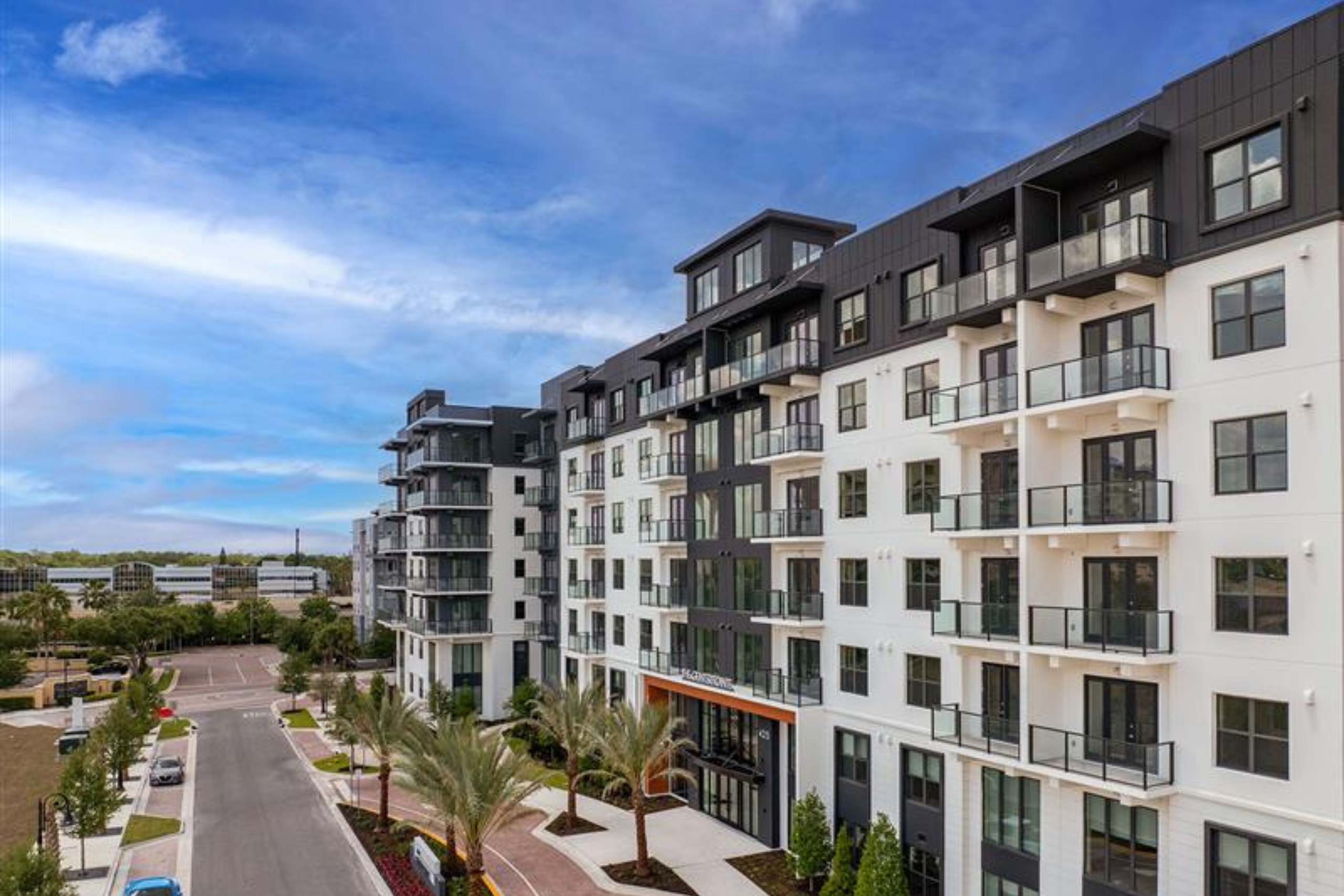
CenterPointe is a 401-unit luxury multifamily community developed by Emerson International as part of a larger 55-acre vision overlooking Crane’s Roost Lake. For Emerson, speed-to-market was a financial imperative—every month gained meant millions in earlier rental revenue. By choosing FINFROCK as architect, precast manufacturer, and general contractor, the developer secured an integrated design-build partner capable of aligning design decisions with pro forma goals from day one. Early cost modeling, optimized unit layouts, and coordinated phasing created a predictable pathway to construction, allowing Emerson to move forward with full clarity on budget, schedule, and potential risks.
Once construction began, the advantages of design-build became even more tangible. FINFROCK delivered the structure in just over seven months, supported by the efficiency of DualDeck® technology, which accelerated trade work and reduced time to revenue. The result was a high-end multifamily product delivered faster, with fewer surprises, and with the long-term durability needed to preserve asset value. Though the initial investment in precast was higher than conventional framing, the financial returns—earlier lease-up, lower maintenance costs, and stronger insurance performance—proved the value of an integrated delivery model built around the developer’s business objectives. Phase 2 of Centerpointe is currently underway, after the success of the first project.
Lake House: How Design-Build Drove One of Orlando’s Most Valuable Multifamily Assets
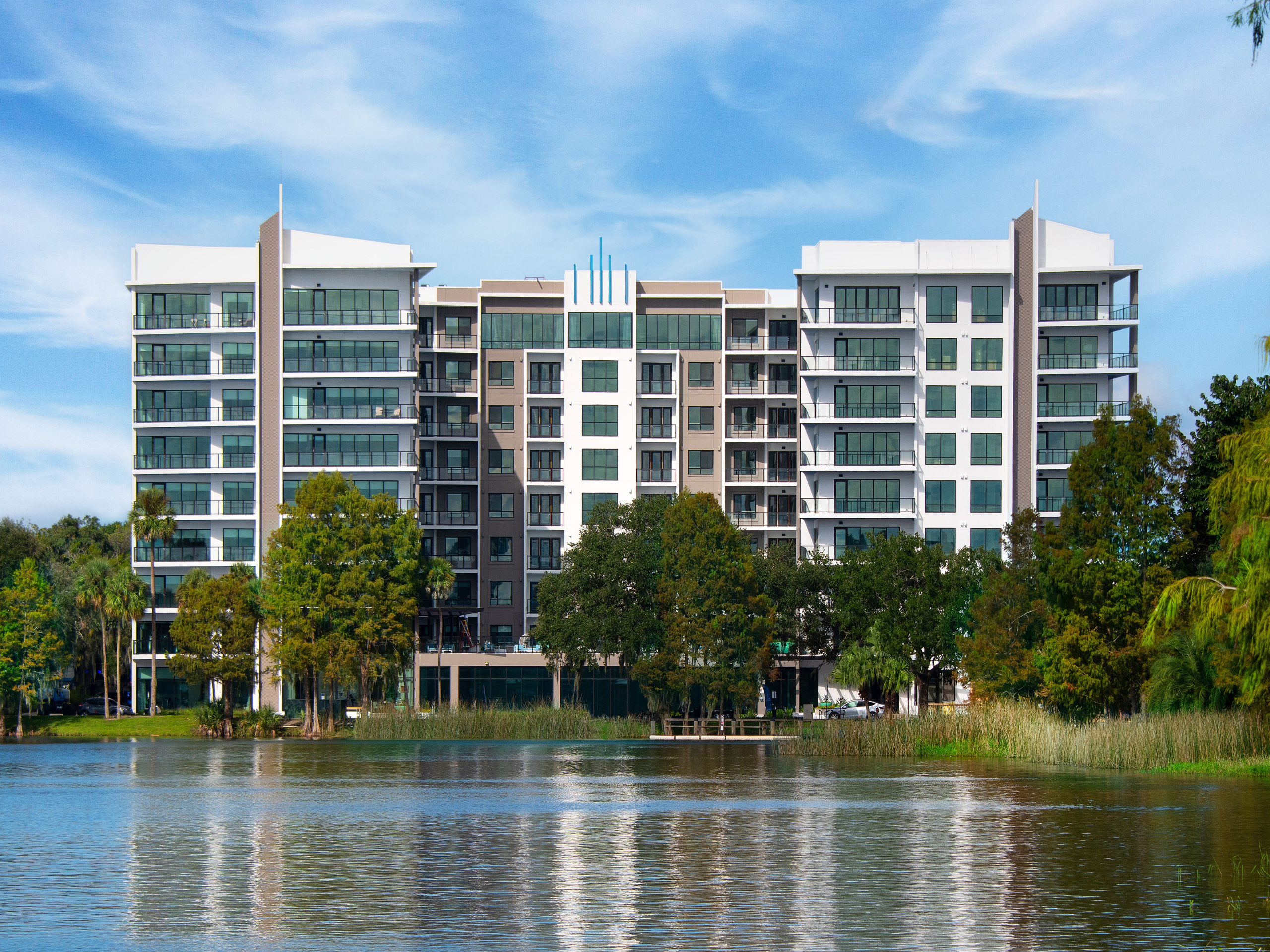
Lake House was conceived as a luxury waterfront community, but its long-term success was defined just as much by how it performed in the market as how it was built. Through FINFROCK’s vertically integrated design-build approach, the project team aligned architectural vision, construction strategy, and financial performance from day one. Early coordination allowed the team to refine building systems, material selections, and layouts in ways that supported premium rents, operational efficiency, and long-term durability without eroding the project’s high-end positioning.
That alignment paid off at sale. In October 2021, the 252-unit Lake House community traded for $132.5 million, setting a Central Florida record on a per-unit basis. The combination of a prime location, distinctive design, and a well-executed construction strategy produced an asset that stood apart in a competitive multifamily market. From luxury finishes and amenity-driven living to efficient systems and durable concrete construction, every decision made during delivery contributed to a property that not only performed during lease-up, but ultimately achieved exceptional value at disposition.
MAA Robinson: An Award-Winning Multifamily Landmark Completed Efficiently Through COVID

MAA Robinson demonstrates how an integrated design-build approach can keep large, complex multifamily developments moving even under extraordinary conditions. Mid-America Apartment Communities (MAA) selected FINFROCK as the complete design-builder for this 11-story, 369-unit luxury tower in downtown Orlando, a decision that proved instrumental as the project advanced through the height of the COVID-19 pandemic. With architecture, engineering, precast manufacturing, and construction all handled by one unified team, FINFROCK topped off the structure just nine months after contract execution, turned over the first floors by month fifteen, and delivered the entire building within twenty-one months. This streamlined process eliminated coordination gaps, ensured consistent progress despite industry-wide disruptions, and allowed pre-leasing to begin in under a year—an outcome traditional delivery methods rarely achieve.
Design-build also positioned the project for long-term performance. FINFROCK’s long-span, column-free structural design gives MAA flexibility for future modifications, while the DualDeck® Building System accelerated construction, reduced the number of trades required on-site, and produced high-end ceiling finishes with minimal prep work. These efficiencies supported faster delivery, higher quality, and reduced life-cycle costs—all while keeping the project on schedule and on budget during an exceptionally challenging period for the industry. The project’s execution earned FINFROCK the prestigious Excellence in Construction Eagle Award, underscoring MAA Robinson as a leading example of what integrated design-build can achieve even in the most demanding circumstances.
Choose FINFROCK’s Integrated Design-Build for Your Next Multifamily Project
In today’s challenging market, choosing the right project delivery method is a strategic decision. Design-build has proven itself the most reliable, efficient, and risk-reducing approach for multifamily development.
At FINFROCK, integrated design-build is more than a delivery method — it’s the foundation of our Design–Manufacture–Construct® approach. Our architects, engineers, and construction teams work under one roof, providing early cost clarity, precision in planning, and unmatched coordination in execution. Decades of expertise and proprietary innovations like DualDeck® allow us to deliver high-quality assets faster and with greater predictability.
Partner with FINFROCK to turn your multifamily vision into a resilient, high-performing investment.